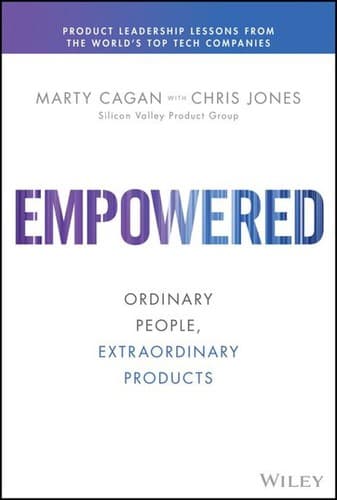
Founder of Silicon Valley Product Group. Author of "Inspired" and "Empowered". Former VP Product at eBay. Pioneered the concept of the empowered product team and has worked with hundreds of technology companies worldwide.
Use the Opportunity Solution Tree to avoid falling in love with your solution. The tree forces you to explore at least 3 solutions per opportunity before running any experiment.
"The biggest mistake PMs make is jumping from problem to solution. The tree makes that jump visible — and stops you."
02
DiscoveryJunior
Schedule one 20-minute user interview every week. Non-negotiable. It does not need to be long — it needs to be consistent.
"The teams that do continuous discovery are not smarter. They just know things their competitors don't — because they talk to users every single week."
03
PrioritizationMid
Size opportunities, not features. Before proposing a solution, quantify the opportunity: how many users are affected, how often, and how painful is it?
"A feature request is a symptom. The opportunity behind it is the disease. Treat the disease."
04
DiscoverySenior
An assumption map surfaces your most critical AND least validated hypotheses. Start every sprint by testing the assumption that could most invalidate your bet.
"Most teams test what is easy to test, not what is critical to test. That's how you build confidently in the wrong direction."
05
CareerMid
Make discovery a team sport. When engineers and designers join customer interviews, you get better solutions, faster buy-in, and fewer "but did we ask users?" arguments later.
"When I said 'the whole team does discovery', PMs pushed back. Within 3 months, every team that tried it never went back."
06
StakeholdersMid
Your job with stakeholders isn't to convince them. It's to make them want to help you. Shift the frame from approval to co-creation.
"A PM who needs approval has a trust problem. A PM who co-creates has allies."
07
PrioritizationSenior
A roadmap communicates what you will NOT do just as much as what you will. Most PMs forget the second half. The "no" is where the strategy lives.
"A roadmap without hard tradeoffs is a wish list. Anyone can write a wish list. Strategy is what you choose NOT to build."
08
CareerSenior
Empowered teams own outcomes. Feature teams own output. The difference between the two determines whether your company innovates or just executes.
"Feature teams build what they are told. Empowered teams are told the problem and trusted to solve it. Only one of those produces breakthrough products."
09
StakeholdersSenior
The PM's role is to serve the team, not the stakeholders. Stakeholders define constraints. The team discovers solutions. Confusing those two roles is fatal.
"When PMs become the messenger between stakeholders and engineering, the product loses. Someone has to own the problem space — and that is the PM's job."
10
Go-to-marketJunior
Never launch a feature without defining what success looks like at 30, 60, and 90 days. A launch without a measurement plan is a guess dressed as a decision.
"If you cannot define success before you ship, you will not recognize failure after you ship. That is how features survive forever without ever being killed."
Recommended by 3 experts
Product
Inspired: How to Create Tech Products Customers Love