Be the PM who makes everyone else's job easier, not the one who stacks features on a roadmap. Influencing is your highest-ROI skill.
"The PMs who grow fastest are not the ones with the most ideas. They are the ones who get engineering and design to have the best ideas."
Shreyas Doshi on pre-mortems, the LNO framework, the three levels of product work, why most execution problems are strategy problems, and ROI vs. opportunity cost thinking
Shreyas Doshi · Lenny's Podcast
Deep Dive
Product managers have no direct authority over engineers, designers, data scientists, or researchers. Every outcome depends on people who could, technically, ignore everything you say. This is why influence is the fundamental meta-skill of the role — everything else is built on top of it.
Shreyas's observation is that junior PMs often confuse having ideas with adding value. They produce long feature lists, detailed specs, and opinionated roadmaps, believing this is what PMs do. But the highest-leverage version of the role is the opposite: creating the conditions under which your team produces better ideas than you could alone.
This means writing clear context (so engineers don't waste time filling in information gaps), removing blockers proactively (so designers don't spend sprint energy navigating organizational friction), and asking questions that reframe a problem (so the team discovers the right solution, rather than executing the first one). Influence at scale is about multiplication — the best PMs amplify their team's capability rather than substituting for it.
How to Apply This
- 1
Start every week by asking each person on your team: "What's the one thing slowing you down?"
- 2
Before adding a feature to the roadmap, ask "who could make this decision better than me?"
- 3
Write context documents instead of solution documents — explain the problem, the user, the constraints; let the team propose solutions
- 4
After cross-functional meetings, send a written summary of decisions and open questions within 24 hours
- 5
Measure your impact by team velocity and morale, not by ideas generated
When to Use This
When onboarding to a new team and establishing credibility
When you notice engineers solving problems you didn't ask them to solve (good sign of trust)
When a stakeholder escalates because "the PM isn't providing enough direction"
Before any performance review — what has your influence enabled that wouldn't have happened without you?
Common Mistakes
Over-specifying solutions in tickets — engineers feel like implementors rather than problem-solvers, and you lose their best ideas.
Solving problems in meetings instead of after them — real alignment happens in 1:1s and async follow-ups, not in the room where everyone performs agreement.
Confusing urgency with importance — responding to every Slack message immediately makes you feel valuable but trains the team to depend on you for answers they could find themselves.
In Practice
Data & Statistics
In a 2023 survey of 500+ PMs by Lenny Rachitsky, "stakeholder alignment" and "cross-functional influence" ranked as the #1 and #2 skills that separated top-quartile PMs from median performers — above both technical skill and data analysis.
Real Examples
At Stripe, a PM noticed that engineers were frequently asking the same clarifying question about a customer segment in sprint planning. Instead of answering it each time, the PM built a one-page customer context document pinned to the team's Notion. Sprint planning speed increased by 40%, and the engineers began proactively referencing user context in technical discussions.
A junior PM at a Series B startup was initially rated average in performance reviews. After shifting from "my ideas" to "team context documents," she became the most cited PM in 360 feedback from engineering leads within 2 quarters.
Speaker
Books recommended by Shreyas
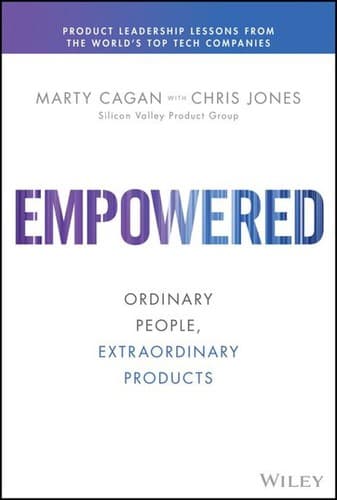
Empowered: Ordinary People, Extraordinary Products
by Marty Cagan
Essential reading for every PM leader who wants to build truly empowered teams. The difference between feature teams and product teams starts here.
Buy the book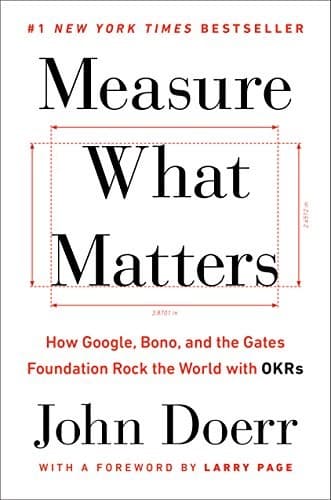
Measure What Matters
by John Doerr
The OKR framework that transformed Google, Intel, and Amazon. Every PM thinking about metrics and alignment should internalize this book.
Buy the book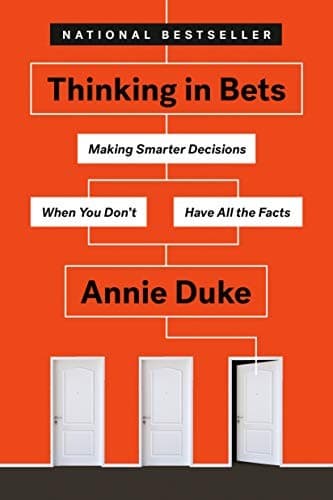
Thinking in Bets
by Annie Duke
A framework for decision-making under uncertainty. Every PM makes bets every day — this book teaches you to make better ones and own the outcomes regardless of the result.
Buy the book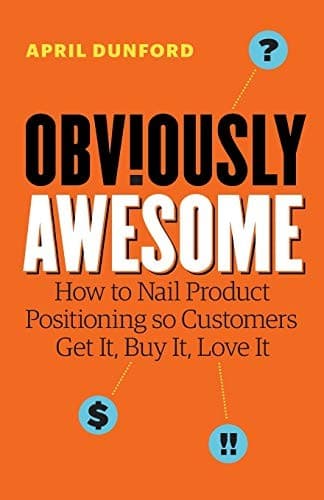
Obviously Awesome
by April Dunford
The clearest book on product positioning available. Required reading before any major launch — most products fail because of positioning, not quality.
Buy the book